Custom API Integrations for B2B Commerce Workflows

If you look at how B2B businesses like manufacturers, distributors, and wholesalers operate today, you’ll notice that it’s basically a giant ecosystem of systems that all need to talk to each other. You’ve got an ERP that runs pricing and inventory, a PIM handling product data, a WMS managing fulfillment, a CRM tracking customer activity, and then an eCommerce or dealer portal sitting on top of it all. And most of the time… none of these systems speak the same language. That’s where custom API integrations for B2B eCommerce workflows come in.
In this blog, we’ll walk through some real case studies of how Codup helped B2B eCommerce businesses with their specific challenges and what kind of custom API integrations for B2B eCommerce workflows we built to solve them.
These case studies demonstrate the real-world value of working with a B2B API integration agency like Codup that understands how to build robust custom API integrations across complex ecosystems. Whether it’s ERP pricing, CRM pipelines, WMS routing, middleware layers, or multi-account B2B workflows, custom API integration for B2B ecommerce workflows must be tailored to the exact business logic that drives your operations.
What Are Custom API Integrations for B2B eCommerce workflows?
Let’s start with the basics, because “API integration” gets thrown around a lot without anyone slowing down to explain it.
So what is an API?
An API is basically a way for two systems to communicate like a structured conversation where both sides agree on the language, format, and rules. For example, ERP to Shopify. CRM to ERP. WMS to your dealer portal – they all talk through APIs.
With that said, what is a custom API integration?
A custom API integration is when you build a tailored connection between two or more systems so they can exchange data exactly the way your business needs them to.
It’s not an app you install nor a one-size-fits-all connector.
It’s built specifically around your workflows, your data, your rules, and your tech stack.
Difference between plug and play integrations and custom API integrations for B2B Commerce:
| Plug and Play Integrations | Custom API Integrations |
| One-size-fits-all | Designed around your pricing rules, warehouse logic, and data structure |
| Limited configuration | Can handle edge cases, exceptions, and custom workflows |
| Built for common workflows | More stable and scalable |
| Easy to install, hard to customize | Can orchestrate multi-system environments |
| Break easily if your business logic is not “standard” | Support advanced authentication, mapping, transformation, and automation |
If your business has anything like “customer-specific pricing”, “multi-warehouse availability”, or “custom quoting logic”, generic connectors usually fall apart fast and you need a custom API integration.
9 Case Studies of Custom API Integrations for B2B eCommerce Workflows
Case Study 1 – Oracle ERP with Shopify Plus Integration for Lighting Manufacturer
The lighting manufacturer sells highly configurable, made-to-order fixtures with thousands of permutations, each tied to specific ERP pricing, freight rules, and compatibility matrices. Before the rebuild, every quote involved long email threads, spreadsheet version drift, and manual work to reconcile ERP pricing with rep-provided quotes. One of the biggest barriers was the lack of real-time integration between Shopify, their configuration logic, and Oracle ERP, which caused delays, inconsistent pricing, and margin leakage.
They needed a digital solution that could turn Oracle into the single source of truth while giving buyers a fast, self-service configuration experience.
To solve this, we built a custom integration architecture behind the Shopify Plus configurator.
Oracle’s account-level price lists, freight rules, tax logic, and SKU mapping were exposed through a middleware layer that powered the configurator in real time.
As buyers selected aperture, ratings, ceiling types, trims, or housing options, the system validated compatibility through Shopify metaobjects while simultaneously pulling the correct ERP pricing, volume breaks, and terms while ensuring that every quote matched Oracle’s rules exactly.
Once a configuration was approved, the tool generated a clean BOM mapped to ERP SKUs and pushed the order directly into Oracle automatically, with acknowledgments and status updates flowing back into Shopify for customer visibility.
By integrating Shopify, the configuration engine, and Oracle through a unified logic layer, the manufacturer eliminated rework, accelerated quoting, and protected margins by ensuring pricing and freight rules were always accurate.
Case Study 2 – Multi-System B2B Integrations for Window Tint Manufacturer
GeoShield’s biggest challenge was that their Shopify site wasn’t behaving like a true B2B portal.
Dealer onboarding was manual, pricing was inconsistent across tiers, and fulfillment was slowed by disconnected systems across Shopify, ShipStation, HubSpot, and two physical warehouses.
They needed a way for all these systems to communicate automatically while assigning the right pricing, routing orders to the right warehouse, syncing dealer data, and enabling a self-serve buying experience without relying on sales reps.
To solve this, we implemented a custom integration layer that tied Shopify Plus to HubSpot, ShipStation, and internal dealer workflows.
Dealer registrations submitted via HubSpot were automatically pushed through an approval flow and converted into Shopify B2B company profiles, complete with role-based access and assigned catalogs.
We also implemented tiered pricing logic using Shopify’s catalog & price list APIs so each dealer automatically saw the correct discount structure and the correct product visibility.
On the fulfillment side, we integrated Shopify with ShipStation to support multi-warehouse routing.
Orders are now automatically routed to Baton Rouge or Las Vegas based on ZIP code, inventory availability, and carrier settings.
Custom product properties including film cut dimensions and add-on metadata are passed through to ShipStation so staff receive fully contextualized picking instructions without manual intervention.
Additional API-based integrations powered affiliate logic (GoAffPro), real-time chat for custom projects (Firebase), and loyalty workflows (Smile.io), creating a unified, automated B2B commerce ecosystem.
The result is a fully integrated B2B operation where dealer onboarding, pricing assignment, fulfillment routing, product customization, and loyalty/affiliate workflows are all orchestrated through custom APIs and Shopify’s B2B infrastructure.
Case Study 3 – Custom Budget Controls and Access Rules in WooCommerce for a Global Bank

Seacoast Bank needed something far more complex than a standard WooCommerce store. Their challenge revolved around integrating internal banking rules, employee budgets, access controls, and card restrictions directly into the eCommerce workflow.
For the B2B employee portal, we integrated budget-based purchasing into the checkout flow, allowing employees to order branded merchandise for clients without triggering payment gateways.
This required custom API-like logic inside WooCommerce: mapping user roles to predefined spending limits, validating budgets at checkout, bypassing payment processing, and preventing unauthorized product access.
We also added a multi-stage authentication layer, a pre-access “key gate,” user login barriers, and role-based ordering permissions to replicate the security requirements the bank had internally.
The B2C storefront required a completely different integration pattern. Instead of bypassing payments, the challenge was building payment enforcement and card filtering logic.
We integrated Stripe for payment processing and then leveraged Stripe Radar to implement a custom rule: block all transactions made with Seacoast Bank employee-issued cards. These cards carry unique four-digit identifiers, so we created rules that automatically reject them at checkout, effectively integrating Stripe’s fraud and filtering system with the bank’s internal card data standards.
Together, these two platforms function as custom-integrated eCommerce applications, each governed by its own set of rules, permissions, and workflow logic.
The outcome was a pair of portals that operated exactly the way Seacoast needed, secure, controlled, automated, and aligned with their internal processes.
Case Study 4 – Middleware-Powered Ticket Routing & Twilio API Integration for Freshdesk for Technology Distributor
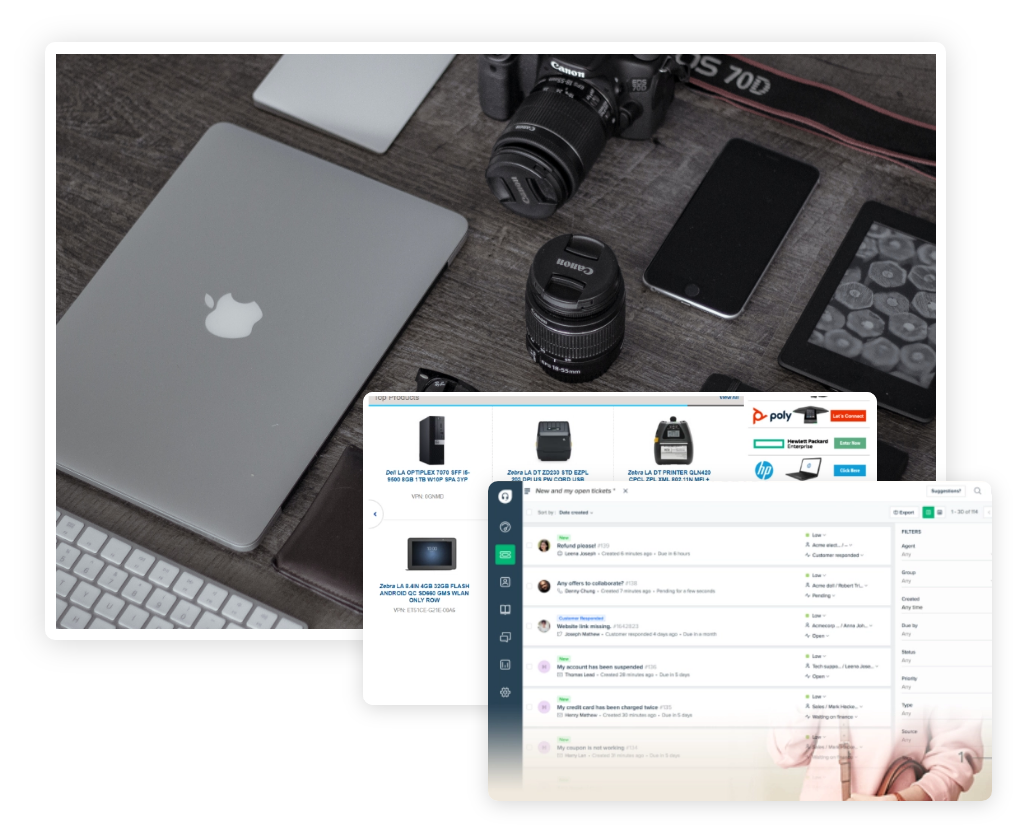
As one of the world’s largest technology distributors, Ingram Micro manages high ticket volumes and mission-critical support operations across global teams. While they relied on Freshdesk for customer service, the out-of-the-box functionality wasn’t robust enough to handle their internal workflow complexity.
They needed deeper automation, tighter control over ticket routing, and a way to keep customers instantly updated. This created challenges that required integrating multiple systems and building the logic Freshdesk didn’t provide natively.
To solve this, we developed a custom middleware application that sat between Freshdesk, Twilio, and Ingram Micro’s internal processes.
This middleware consumed incoming ticket data through Freshdesk’s API, applied custom rules based on ticket type, status, and priority, and then automatically routed each ticket to the correct agent group.
This replaced manual triage and ensured every ticket landed with the right team instantly. On top of that, we integrated Twilio’s SMS API through the same middleware, enabling automated text notifications whenever a ticket’s status changed, complete with rate-limit handling, status validation, and trigger conditions.
By shifting the intelligence out of Freshdesk and into a dedicated middleware layer, Ingram Micro gained a stable, scalable integration framework that automates ticket assignment, streamlines internal workflows, and keeps customers in the loop in real time.
The result is a support ecosystem that finally matches the operational scale of a global distributor.
Case Study 5 – Shopify with Freshsales CRM Integration for Non Profit
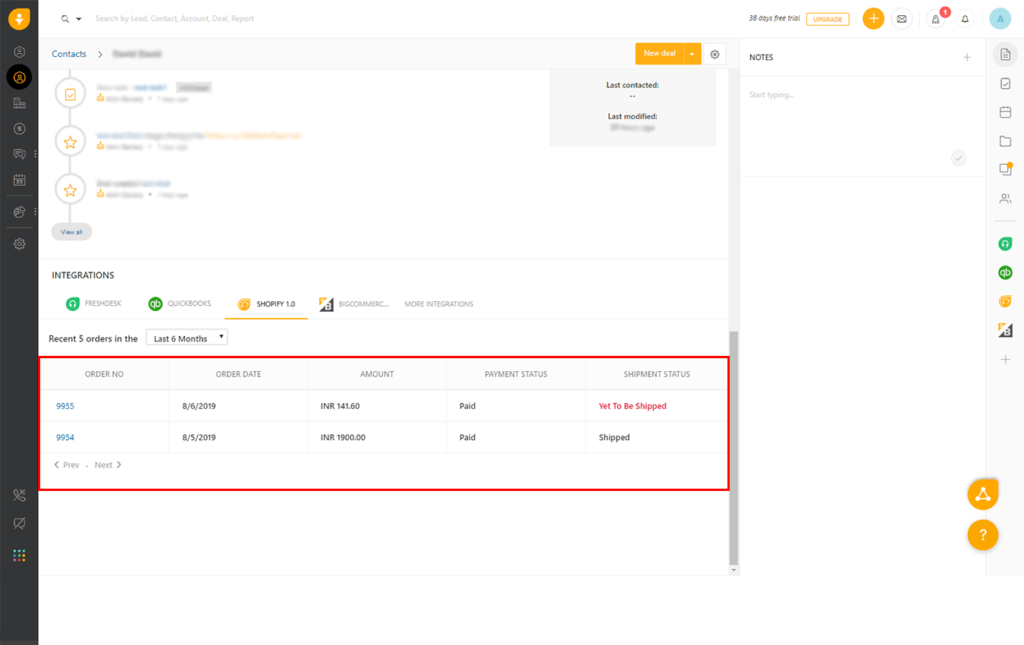
As a global, donation-driven organization, One Tree Planted receives contributions from supporters across multiple countries every single day. Most of this activity flows through their Shopify site, but donor management happens inside Freshsales CRM.
The challenge was that these two platforms had no native bridge, meaning donor details, contribution history, and engagement data had to be transferred manually.
With thousands of donors and a high volume of recurring activity, this manual process became slow, error-prone, and unsustainable. They needed a way to automatically sync every donor, every donation, and every profile update from Shopify into Freshsales in real time.
We built a custom Shopify with Freshsales integration that acts as a seamless data pipeline between the two systems. Whenever a donation or order is created on Shopify, the integration captures the relevant contact data, donation amount, and historical contribution details, and syncs it into Freshsales automatically.
Each donor’s CRM profile now includes their full donation history, helping the team segment supporters, understand contribution patterns, and deliver more personalized communication.
The integration handles schema mapping, API authentication, and error-safe data posting, ensuring the CRM always remains accurate and up to date.
With automated donor syncing in place, One Tree Planted now manages supporter relationships at scale without the operational burden of manual updates.
The organization can finally treat its Shopify activity as a live data source for CRM intelligence, freeing the team to focus on expanding global reforestation instead of reconciling spreadsheets.
Read: One Tree Planted Case Study
Case Study 6 – Centralized Data Feed Integration for Automotive Marketplace

As Pickles expanded its marketplace for vehicles and industrial equipment, their resellers began facing a major operational bottleneck.
All product and listing data came from one massive, unified data source, regardless of whether a reseller specialized in luxury cars, heavy machinery, salvage units, or trucks.
This meant every reseller had to manually sort through thousands of irrelevant entries to find inventory that matched their niche, a workflow that became increasingly inefficient as the platform scaled.
Pickles needed a way to split, filter, and distribute data intelligently to each reseller’s branded subsite without manual intervention.
To solve this, we built a custom integration and data orchestration system using a Laravel + MongoDB management panel.
This middleware layer consumed the central data feed, sanitized and normalized the incoming records, applied reseller-specific filtering rules, and then pushed the curated dataset into each reseller’s WordPress subsite.
Every subsite was provisioned automatically through the management panel, complete with custom branding, theming, and structural configuration defined through the integration rules. This architecture effectively transformed a single, monolithic data feed into automated, personalized reseller storefronts.
Beyond data distribution, we also built an integrated lead routing feature: resellers could curate a set of vehicles and generate custom shareable links for their customers.
When customers engaged with these links, they only saw the preselected vehicles and their inquiries were automatically attributed back to the correct reseller.
With this custom data integration framework, Pickles was able to scale to more resellers rapidly, maintain accurate inventory distribution, and give each reseller a streamlined, automated workflow tailored to their specialization.
Case Study 7 – Zakeke and B2BWoo Integration for Clothing Manufacturer
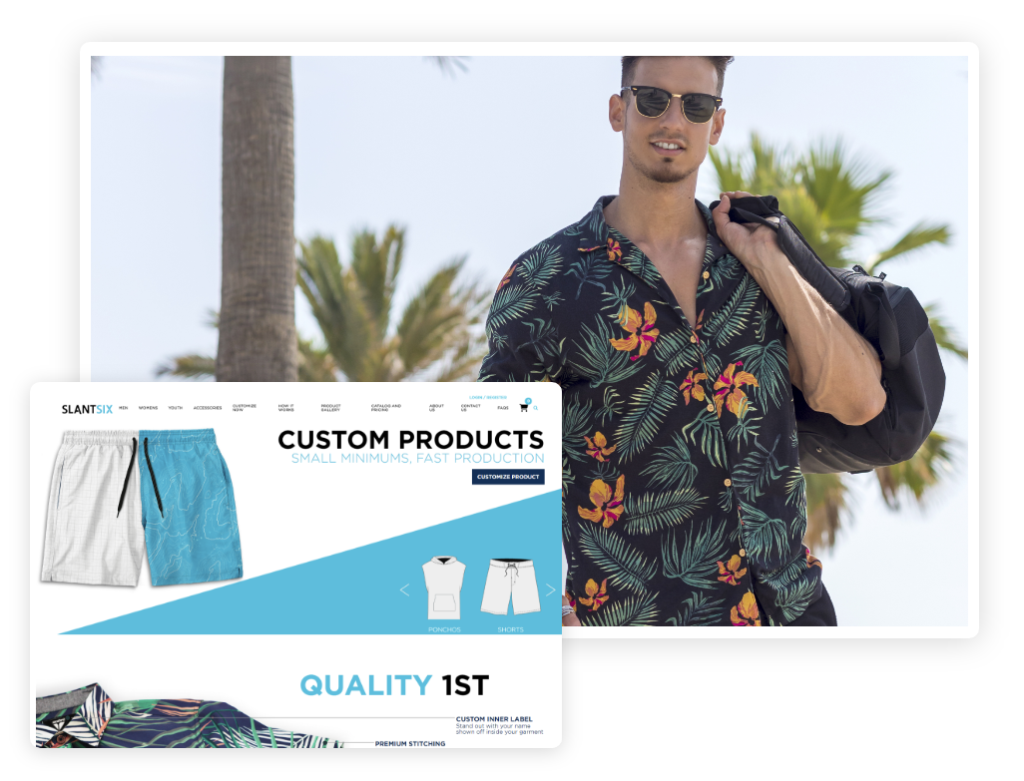
Slant Six needed more than a standard WooCommerce setup. They required a tightly integrated B2B workflow where wholesale rules, product customization, MOQ logic, and sales-rep functionality all worked together seamlessly.
Their biggest challenge was that two key systems they depended on, Zakeke (for product customization) and B2BWoo (for wholesale pricing, roles, and catalog logic), were never designed to communicate with each other.
This meant minimum order quantities, size-based conditions, and wholesale rules weren’t being enforced correctly when customers customized products. Integrating these plugins into a single, unified B2B ordering experience required custom logic that sat between them.
To solve this, we built a bespoke integration layer that synchronized Zakeke’s customization workflows with B2BWoo’s wholesale rules. This meant stitching together product-level MOQs, dynamic size/variant conditions, and customization selections so both systems could enforce the same rules consistently.
We also extended B2BWoo with additional customizations, including sales-rep login with customer masquerading, role-based visibility, reordering tools, and wholesale product table views. On the frontend, the theme was rebuilt and navigation restructured to support the new logic-driven flows. We integrated WooCommerce Deposits to enable Slant Six’s 50% upfront payment model, which required ensuring the deposit logic worked cleanly with the wholesale and customization layers.
The result was a fully integrated B2B ordering experience where product customization, pricing rules, MOQs, and sales-rep workflows all operate from a single logic framework.

Case Study 8 – QuickBooks with WooCommerce Integration for Equipment Manufacturer
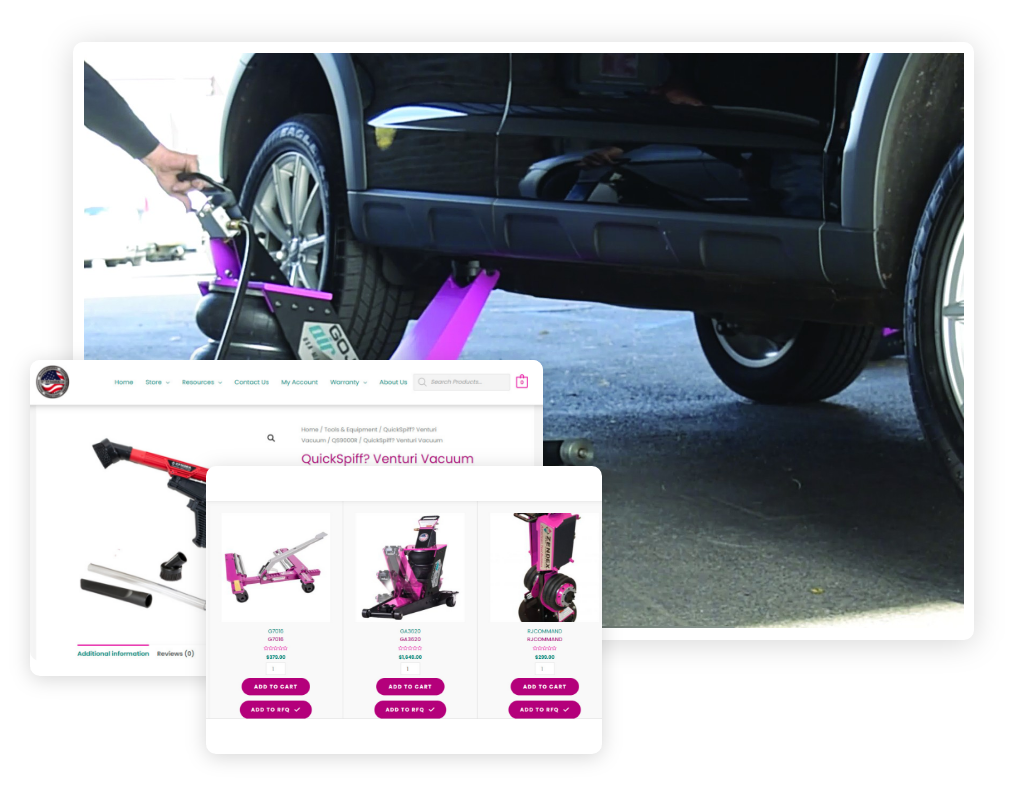
As Zendex Tool Corp looked to modernize their digital sales channels, one of their biggest obstacles was the disconnect between their WooCommerce site and their accounting/operations system, QuickBooks.
Their website was handling B2B orders, RFQs, custom pricing, and catalog visibility rules, but none of that data flowed cleanly into QuickBooks. Product updates, inventory levels, order details, and customer information had to be managed separately in both systems, a process that slowed down operations, introduced errors, and made it difficult to scale online sales.
For a manufacturer selling across marketplaces and their own store, this lack of system integration was becoming a core operational bottleneck.
To bridge this gap, we implemented a custom WooCommerce with QuickBooks integration that synchronized products, orders, customers, and inventory in both directions.
This required mapping WooCommerce’s B2B features (pricing rules, buyer roles, RFQs, dropship workflows) to QuickBooks’ data structure so sales activity and operational data could stay aligned automatically.
The integration ensured that when orders were placed, customer profiles created, inventory updated, or dropship workflows triggered, QuickBooks mirrored those changes instantly.
Combined with B2BWoo’s features for pricing, catalog visibility, and procurement-friendly workflows, Zendex’s website became a fully connected B2B storefront that plugged directly into their financial and operations system.
Case Study 9 – Auth0 SSO & Unified CRM Integration for Smart Switches Manufacturer
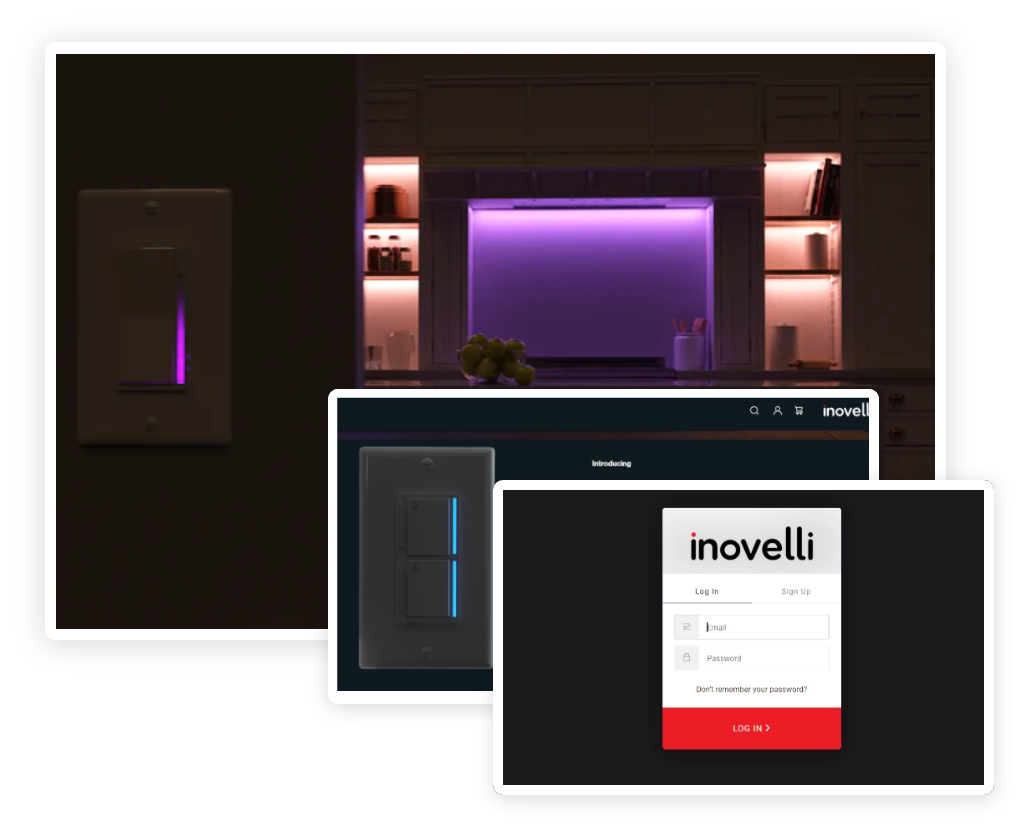
Inovelli’s biggest operational challenge came from having user identities scattered across multiple systems. Their eCommerce platform (BigCommerce), customer support system (Zoho Desk), and community forum (Discourse) all stored user credentials independently, creating isolated identity silos.
Customers needed different logins for each platform, which led to low engagement and high login friction. Internally, the team couldn’t get a unified view of customer activity, support history, or segmentation data because nothing synced automatically between systems.
To fix this, we built a centralized authentication architecture using Auth0 as the single identity provider across all platforms. BigCommerce, Zoho Desk, and Discourse were integrated directly with Auth0 via SSO, allowing users to authenticate with one ID across every touchpoint. We also implemented a controlled re-registration flow to migrate users cleanly into Auth0’s identity store.
Beyond authentication, we created automated data sync workflows so that new user accounts and profile updates pushed into Zoho CRM and Zoho Campaigns in real time. To support accurate segmentation, we extended signup forms with B2B/B2C identifiers that routed users into the correct CRM pipelines.
By consolidating identity into a unified SSO system and eliminating the silos between commerce, support, and community platforms, Inovelli now operates from a single, integrated customer identity layer.
Users get a seamless login experience, while the internal team benefits from accurate CRM data, consistent user profiles, and a centralized view of customer behavior across the entire ecosystem.

How to Choose the Right Development Partner for Custom API Integrations for B2B eCommerce Workflows
When it comes to custom API integrations for B2B eCommerce workflows, choosing the right development partner makes the difference between a system that quietly works in the background and one that constantly breaks under real-world conditions.
Because integrations sit at the center of your business operations, the partner you choose should be evaluated with the same scrutiny you’d apply to choosing an ERP or commerce platform.
A strong partner will not just “connect APIs.” They’ll understand your business rules, your workflows, and your constraints well enough to design an integration that remains stable as you scale. Here are the most important qualities to look for.
1. Experience With Your ERP, PIM, or Operational Systems
Every ERP whether it’s SAP, NetSuite, Dynamics, Odoo, or QuickBooks has its own quirks, rate limits, authentication patterns, and data models. The same goes for PIMs, WMS tools, and CRMs. Look for teams who have worked with your specific systems before or can demonstrate experience with platforms of similar complexity.
2. Deep Understanding of B2B Workflows
B2B commerce isn’t just “B2C with logins.” It includes tiered pricing, multi-warehouse logic, procurement rules, quoting flows, approval layers, MOQs, custom catalog visibility, and account-level permissions. A good partner understands these realities and builds integrations that support them, not work against them.
3. Ability to Build Middleware and Orchestration Layers
The most reliable integrations don’t connect two systems directly—they run through a middleware layer that handles transformation, validation, retries, logging, and business logic. Look for a partner who knows when middleware is necessary and can build it in a way that’s maintainable and scalable.
4. Strong QA and DevOps Discipline
Integrations fail quietly when not properly tested. Your partner should have a mature QA process, automated testing where possible, and DevOps practices that include monitoring, error alerting, and safe deployment pipelines. This ensures your data flows don’t break when one platform updates or throttles requests.
5. Long-Term Support Capability
Integrations aren’t “set it and forget it.” APIs change, platforms update, business rules evolve, and new systems get added. The right partner offers ongoing support, monitoring, and iteration not just a one-time delivery.
6. Clear Communication and Documentation
Because integrations touch multiple systems and teams, your development partner must be excellent at documenting data flows, endpoints, mapping rules, and failure conditions. Clear communication makes the integration usable long after the original developers have moved on.

Frequently Asked Questions About Custom API Integrations for B2B eCommerce Workflows
1. What is a custom API integration in B2B commerce?
A custom API integration connects two or more systems—like an ERP and an eCommerce platform—using tailored logic built specifically for your workflows, pricing rules, and data structures. Unlike generic connectors, custom integrations handle complex B2B requirements like tiered pricing, warehouse routing, approval flows, and account-based visibility.
2. Why do B2B companies need custom API integrations?
B2B companies deal with unique workflows: multi-warehouse inventory, customer-specific pricing, quoting flows, and procurement rules. Plug-and-play connectors can’t support these complexities, making custom API integrations essential for accurate, real-time operations.
3. How does a B2B API integration agency help?
A B2B API integration agency specializes in mapping your data flows, understanding your rules, identifying integration points, and building a scalable architecture. They ensure systems communicate reliably and reduce the risk of failures, mismatches, and manual work.
4. What systems can be connected via API integrations?
Most B2B technology stacks include ERPs, CRMs, PIMs, WMS tools, accounting systems, and eCommerce platforms. Any platform with an API can be integrated through custom logic or middleware.
5. How long does a typical B2B API integration project take?
Simple integrations can take 2–4 weeks, but complex, multi-system integrations—especially those involving ERP pricing or fulfillment rules—can take 2–3 months depending on scope, API limitations, and testing requirements.
6. What’s the difference between middleware and direct API integration?
Middleware acts as an orchestration layer between systems. It handles transformation, validation, retries, error logging, rate limiting, and complex workflows. Direct integrations connect systems one-to-one, which is simpler but less scalable.
Conclusion
Whether you’re connecting an ERP to your storefront, syncing a CRM with your support tools, or building a middleware layer to orchestrate multiple platforms, the principles remain the same: clear rules, consistent data, and architecture built for scale.
As the case studies above show, the most successful integrations are the ones designed around how a business actually operates, not just how two platforms say they should.
When your systems communicate the right way, your team moves faster, errors drop, and your customers feel the difference instantly.
If you’re exploring API integration for B2B commerce, whether that means connecting your ERP, implementing middleware, syncing your CRM, or building multi-system automation, partnering with a seasoned B2B API integration agency like Codup can accelerate the process and prevent costly mistakes. Custom API integrations built with scalability in mind give your business the ability to grow without breaking its operational backbone.