
Build the Revenue System
Behind Digital Commerce
A website, ecommerce platform, or CRM does not create growth on its own.
Digital revenue depends on how your go-to-market strategy, marketing systems, sales enablement, CRM workflows, and revenue operations work together.
Codup helps manufacturers, distributors, and growth-focused commerce teams build the operating system behind demand generation, lifecycle marketing, sales conversion, and pipeline visibility.


What is GTM strategy?
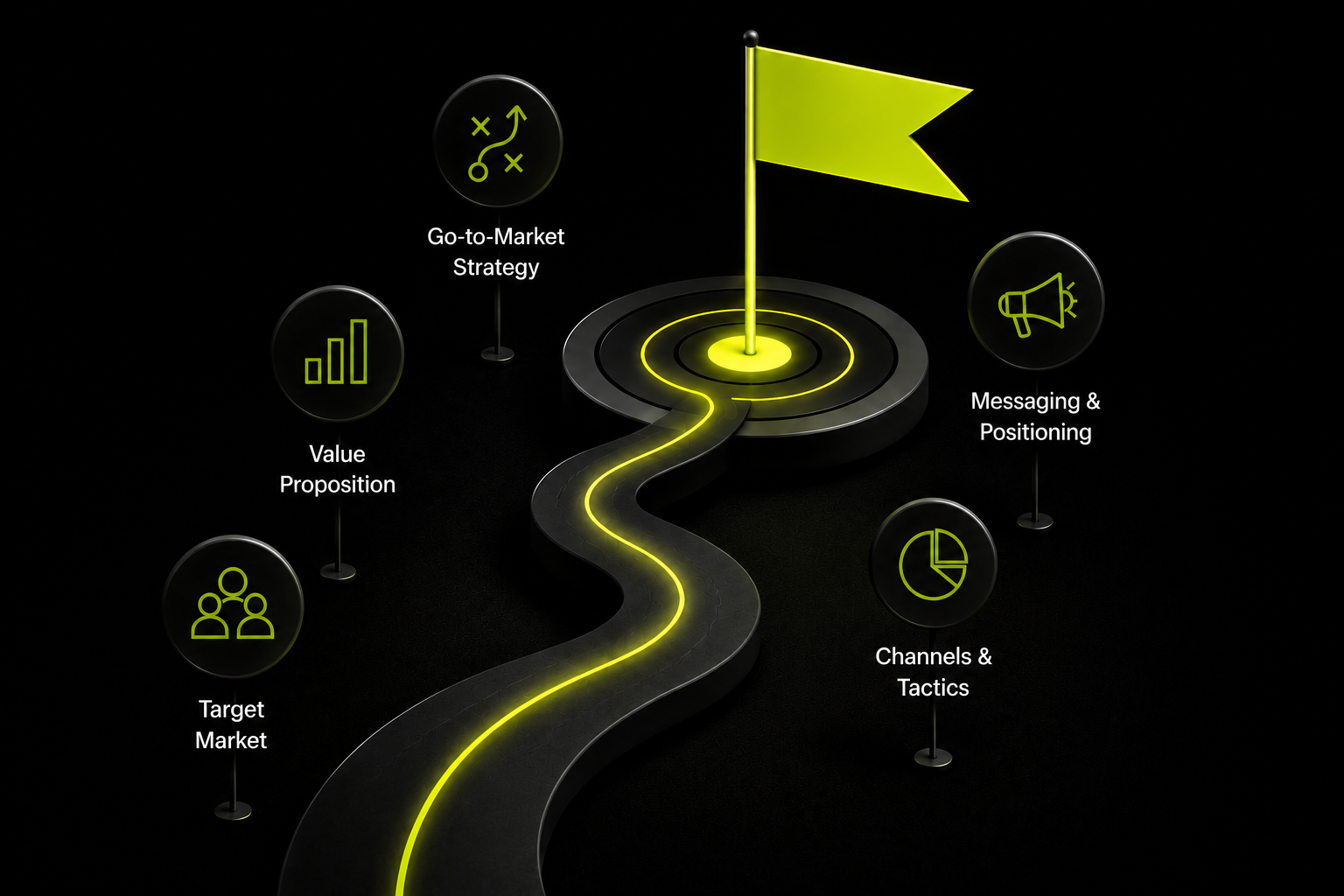
GTM strategy defines how a company brings its product, service, or digital commerce offer to market. It includes audience segmentation, ICP definition, positioning, messaging, channels, campaign strategy, sales motion, and revenue operations.
For manufacturers and distributors, GTM strategy is especially important because digital commerce rarely succeeds through technology alone. Growth depends on how marketing, sales, CRM, customer experience, and operational systems support the same buying journey.
Growth Requires More Than Campaigns

When Marketing, Sales, and Systems Drift Apart
Most revenue teams do not have an effort problem. They have an alignment problem.
Marketing creates activity sales cannot convert
Leads come in, but qualification, messaging, and follow-up are inconsistent.
Sales teams receive uneven demand
Some leads are ready. Others are vague, early, or poorly routed.
Automation does not match the buying journey
Workflows fire, but they do not reflect how buyers actually move.
Campaigns produce reports, not revenue clarity
Traffic and engagement rise, but pipeline impact stays unclear.
CRM data becomes unreliable
Incomplete fields, weak lifecycle stages, and inconsistent updates make reporting hard to trust.
Leadership cannot see what drives revenue
The business has tools, but not a connected revenue architecture.
What Changes When GTM, Sales, and CRM Work Together
The transformation from fragmented operations to unified revenue systems

Before
Disconnected systems
Marketing campaigns operate separately from sales workflows
Demand generation produces leads without clear qualification
Lifecycle automation does not reflect the buyer journey
Sales teams rely on manual processes and inconsistent messaging
Leadership lacks visibility into what drives pipeline
Fragmented Growth

After
Unified revenue system
Positioning and messaging clarify the target audience
Marketing programs generate better-qualified demand
Sales teams follow structured conversion workflows
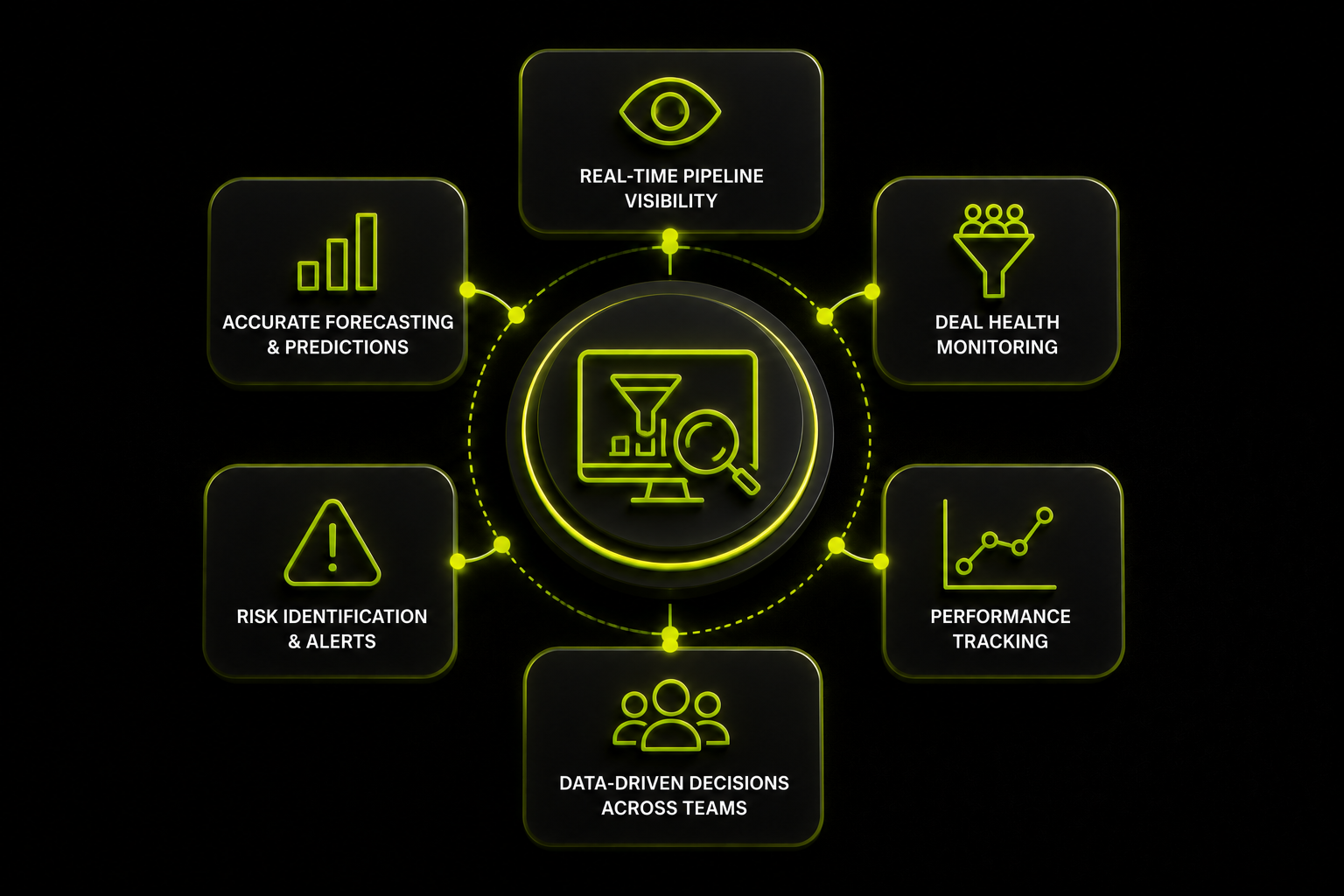
CRM systems provide cleaner pipeline visibility
Leadership understands how marketing and sales influence revenue
Revenue Aligned

3x
Pipeline Visibility
60%
Better Alignment
2x
Conversion Rates
Go-To-Market Strategy, Marketing Systems, and Sales Enablement
GTM Strategy
Define the market, audience, offer, message, and path to revenue.
Marketing Systems and Demand Generation
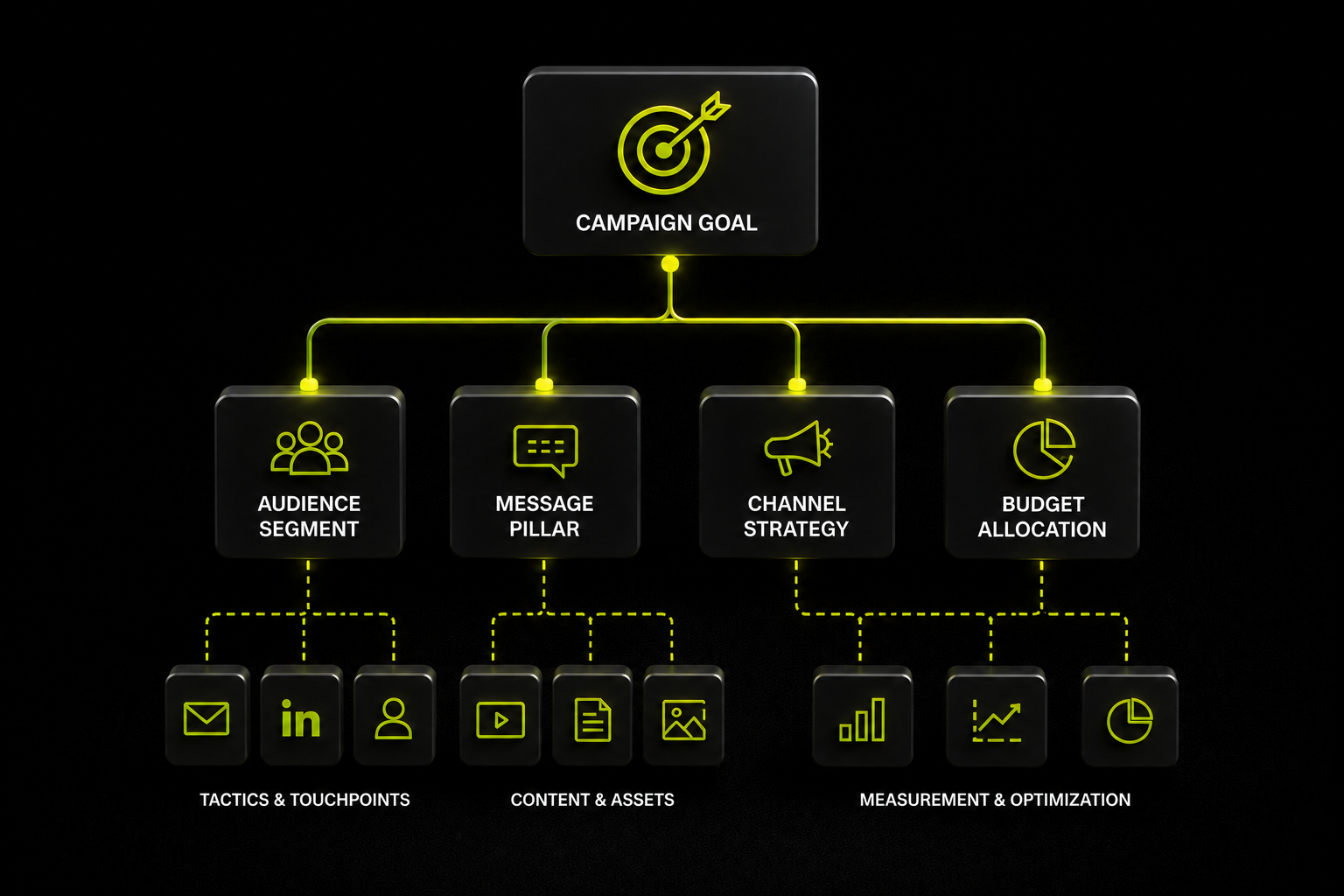
Build campaigns, content, lifecycle programs, and conversion paths that support pipeline.
Sales Enablement
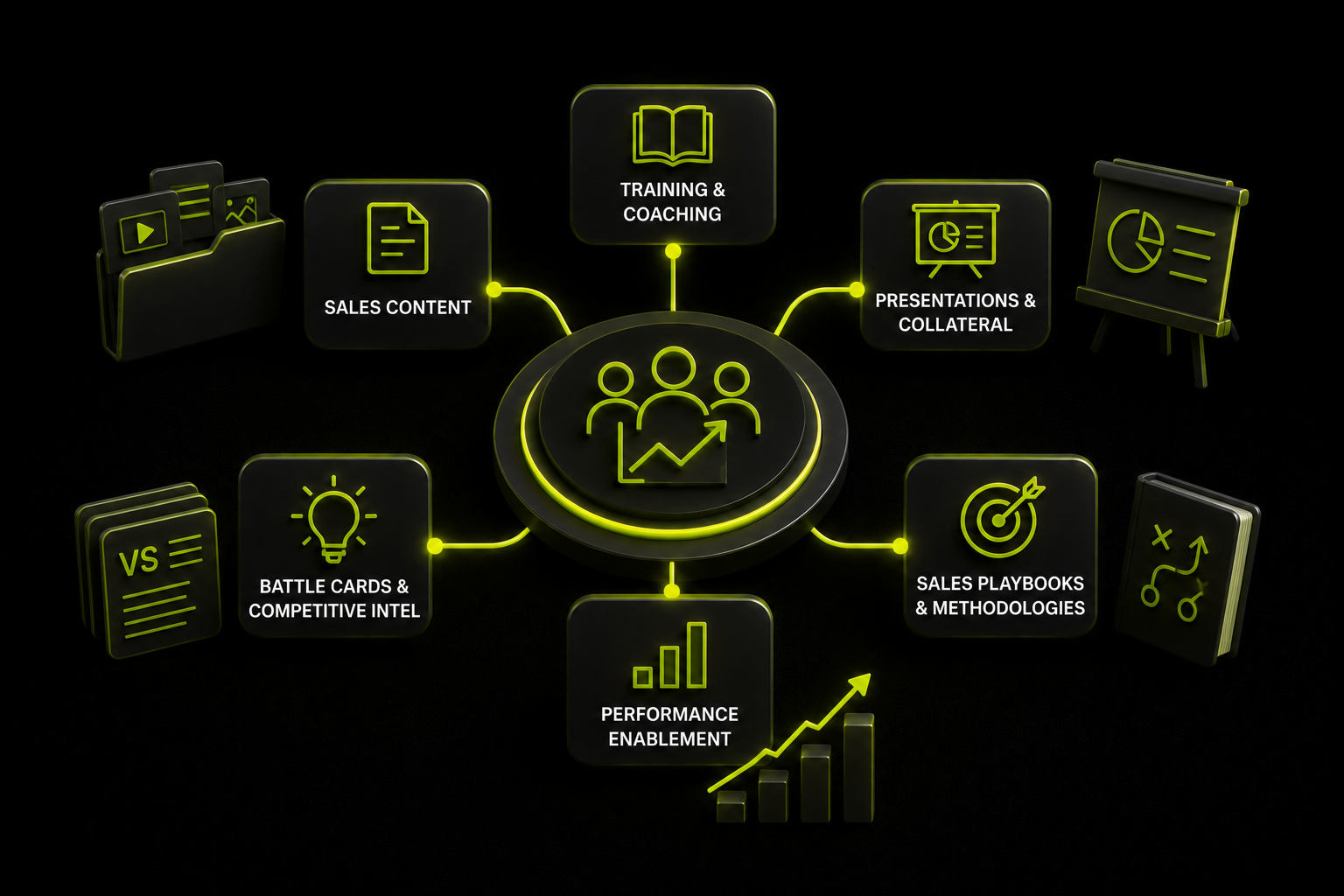
Equip sales teams with messaging, playbooks, workflows, and assets that help convert demand.
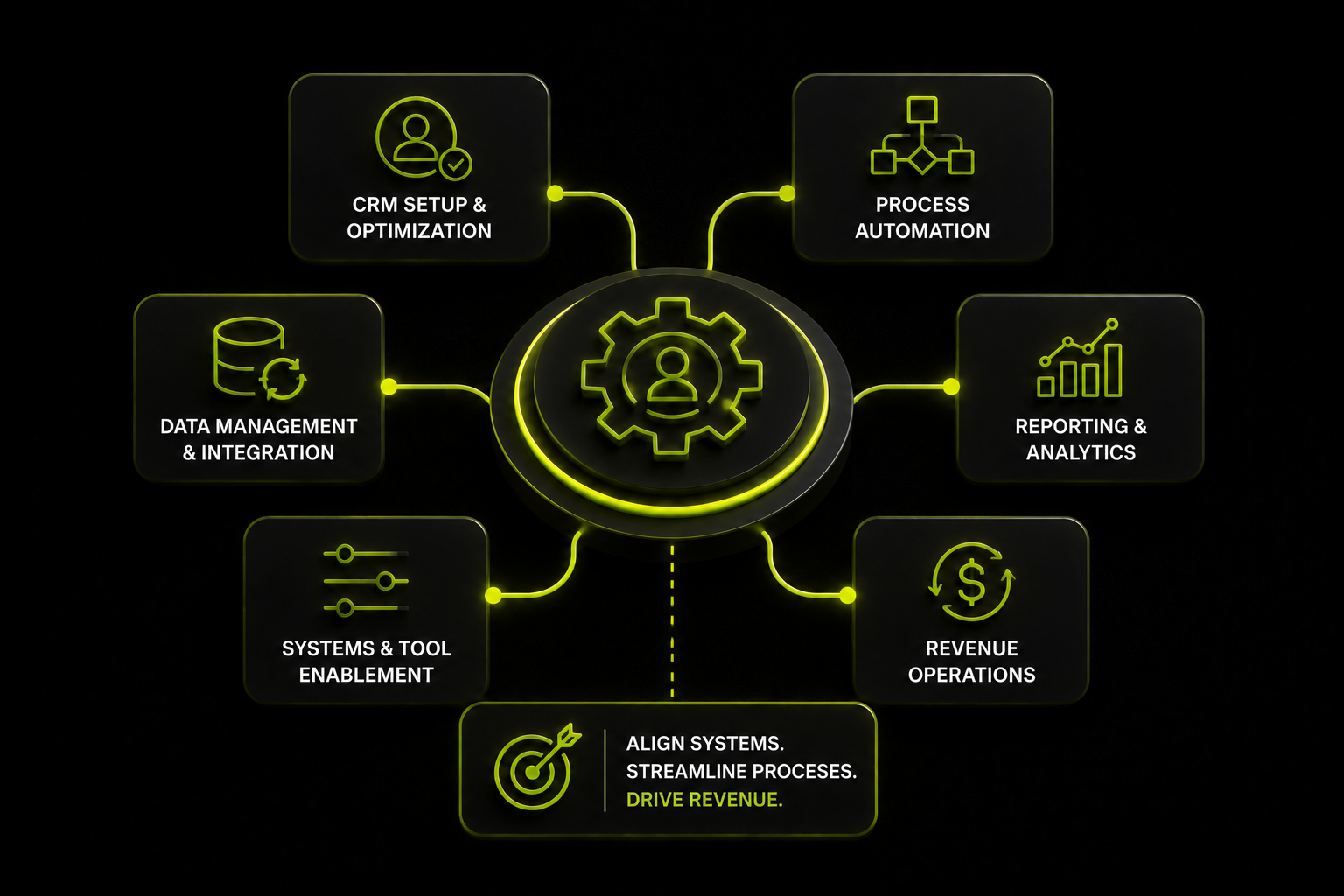
CRM and Revenue Operations
Connect marketing and sales activity through lifecycle stages, automation, reporting, and governance.
GTM and Sales Enablement Capabilities
GTM Strategy
Define the market, audience, offer, message, and path to revenue.
Demand Generation Strategy
Campaign architecture, audience planning, conversion paths, landing page strategy, content programs, and pipeline-focused marketing execution.
Lifecycle Marketing
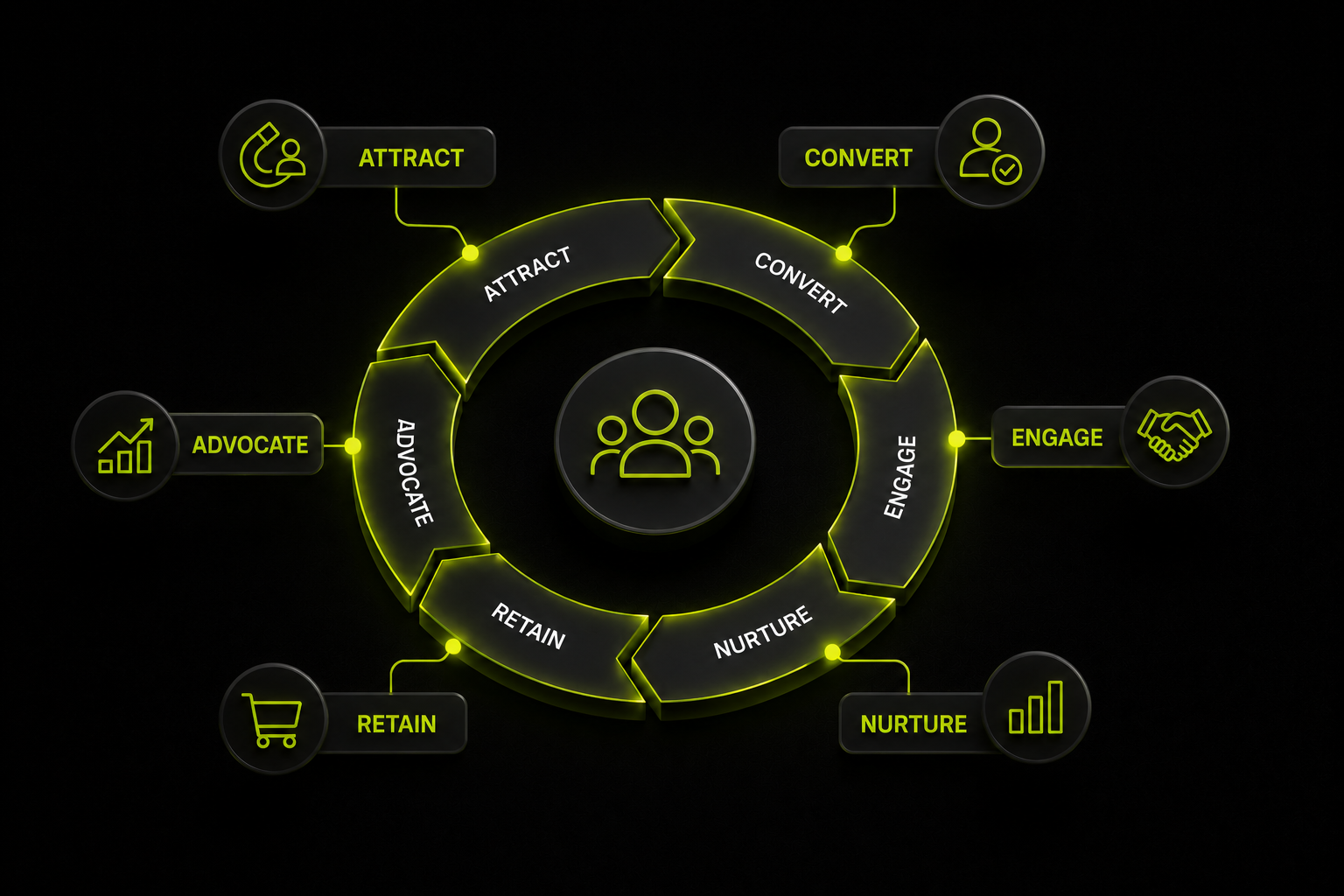
Email automation, nurture flows, buyer journey mapping, re-engagement programs, and lifecycle stage design.
Sales Enablement
Sales playbooks, SDR messaging, qualification frameworks, objection handling, follow-up sequences, and sales asset development.
CRM and Revenue Operations
HubSpot implementation, lead routing, workflow automation, lifecycle stages, lead scoring, attribution, reporting dashboards, and CRM governance.
SEO, AEO, and AI Search Optimization
Content systems designed for human buyers, search engines, and AI retrieval across high-intent commercial queries.
How Codup Builds a Connected Revenue System
Why Codup Is Different
Internal Teams
Often know the business deeply, but lack the capacity to design and implement the full revenue system.
Marketing Agencies
Can generate traffic and campaigns, but often stop before sales alignment, CRM structure, or pipeline operations.
Sales Consulting
Improve messaging and sales motion, but may not connect marketing systems, automation, and demand generation.
CRM Partners
Configure tools, but often do not address GTM strategy, positioning, or campaign performance.
Codup
Connects the full operating layer: strategy, marketing execution, sales enablement, CRM infrastructure, and revenue operations.
Example: Manufacturer Scaling Digital Commerce
- Dealers continue ordering through email
- Sales teams struggle to support digital channels
- Marketing generates leads sales cannot convert
- CRM data becomes inconsistent
- Leadership cannot see what is driving pipeline

Codup Engagement
A mid-market manufacturer launches a new ecommerce platform to support dealer ordering. The technology is live, but challenges appear quickly:
Diagnose
Assess GTM strategy, CRM systems, sales workflows, marketing programs, and pipeline reporting.
Design
Develop messaging architecture, lifecycle marketing strategy, lead routing, and sales enablement frameworks.
Implement
Deploy HubSpot automation, campaign architecture, SDR sequences, sales playbooks, and reporting dashboards.
Optimize
Improve pipeline conversion, sales alignment, campaign performance, and CRM visibility.
This Service Is Built For
Manufacturers launching or scaling digital commerce
Distributors building stronger demand and sales systems
Wholesale commerce companies modernizing buyer journeys
B2B ecommerce teams improving pipeline conversion
Mid-market companies implementing or cleaning up HubSpot
Growth teams that need marketing, sales, and CRM to work together

What Better Revenue Systems Improve
Market positioning
Demand quality
Lead qualification
Sales conversion
Marketing and sales alignment
CRM data reliability
Pipeline reporting
Campaign performance
Revenue visibility
Scalable growth operations
Frequently Asked Questions
What is GTM strategy?
GTM strategy defines how a company brings its product, service, or offer to market. It includes audience segmentation, positioning, messaging, channels, campaign planning, sales motion, and demand generation strategy.
What is sales enablement?
Sales enablement gives sales teams the messaging, tools, workflows, and assets they need to convert demand into qualified opportunities and revenue.
What is revenue operations?
Revenue operations connects marketing, sales, CRM systems, automation, reporting, and pipeline processes into one operating model for revenue growth.
What does a HubSpot implementation partner do?
A HubSpot implementation partner helps configure CRM infrastructure, lifecycle stages, automation, lead routing, reporting dashboards, and marketing workflows.
What industries benefit most from GTM strategy consulting?
Manufacturing, distribution, B2B ecommerce, SaaS, and enterprise technology companies benefit from structured GTM strategy, sales enablement, and revenue operations.


